
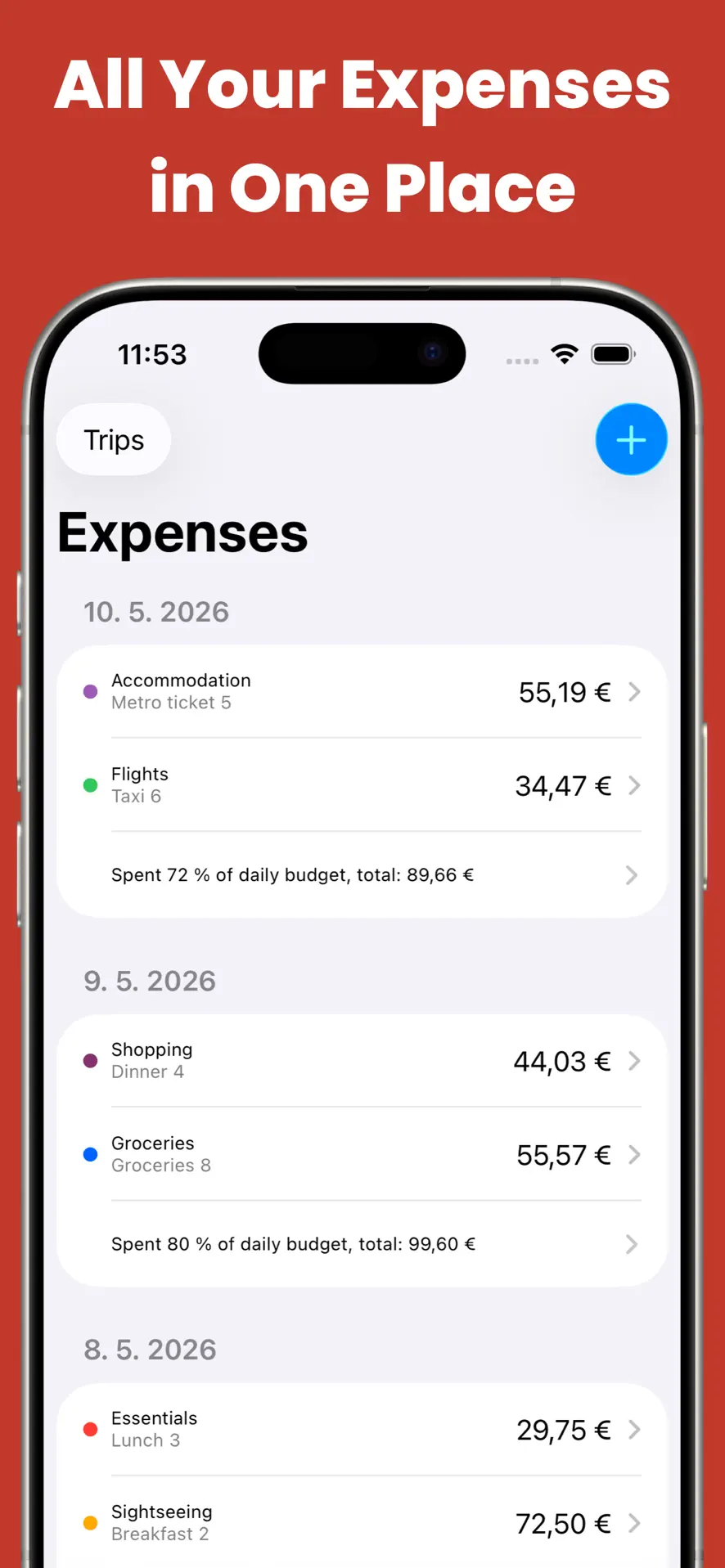
Short answer: agree the budget and the rules before you fly, keep one shared trip that everyone adds expenses to, and separate two different jobs: tracking what the group is spending against its budget, and settling who owes whom at the end. In Costari you invite the people you are traveling with to the trip, and everyone’s expenses land in the same shared budget, synced across devices.
Two jobs people confuse
Almost every group-trip money problem comes from mixing these up:
- Budget tracking: is the group on track? What has the trip cost so far, what is left for the last three days, can we afford the boat?
- Debt settlement: who paid what, and who owes whom at the end.
Splitting apps do the second job well and the first one barely at all: they can tell you Alex is owed €62, but not that the group has burned 70% of its budget with four days to go. A trip budget app does the opposite. Most groups want both, and the cleanest setup is one shared trip budget everyone can see, plus a quick settle-up at the end.
Decide the rules before you leave
A five-minute conversation before the trip prevents most of the friction:
- What is shared and what is personal? Accommodation, groceries, taxis and group meals are usually shared. Souvenirs, extra drinks and the massage on day four usually are not.
- Who pays? A rotating payer (whoever is nearest the till) is simplest; a shared kitty works well for cash-heavy destinations; one person paying everything and settling later is fine if that person is comfortable fronting it.
- What is the budget? Per person per day, agreed by everyone. It is much easier to say “that is outside what we agreed” than “I do not want to”.
- What happens with different budgets? If one person is on a tighter budget, plan the optional expensive things as opt-in rather than assuming everyone is in.
Log shared expenses once, in one place
The failure mode is four people each keeping their own notes. Nobody has the total, everyone remembers a slightly different version of the taxi fare, and the reconstruction happens in an airport at 6 a.m.
One shared trip fixes it: whoever pays adds the expense immediately, with a note of who paid. Everyone sees the same running total, so “can we afford the boat trip?” is answered by a screen instead of a debate.
Settling up at the end
With a complete shared list, settle-up is arithmetic rather than archaeology:
- Total the shared expenses for the trip.
- Divide by the number of people (or by the agreed shares).
- Compare each person’s share against what they actually paid.
- Settle with the fewest possible transfers: one person usually pays one other, not everyone paying everyone.
If your group is large or the splits are uneven, a dedicated splitting app is worth running alongside for the final math. The shared expense list is the input either way, and that is the part that has to be captured during the trip.
Group trips in Costari
- Create the trip with dates, home currency and the group budget (total or per day).
- Invite the other travelers to the trip so everyone can add expenses to the same shared budget.
- Everyone logs what they pay, in local currency. Conversion is automatic, so a group crossing borders still sees one comparable total.
- Check the trip screen together. Total against budget and remaining daily budget mean decisions get made with numbers instead of vibes.
- Use the stats at the end for the settle-up conversation: category totals and daily breakdowns, all in one place.
Personal spending is best kept out of the shared trip. Keep a second, private trip for your own souvenirs and extras if you want the full picture of what the holiday cost you.

Costari: Travel Spend
Trip budgets, 150+ currencies, shared trips and a remaining daily budget you can check in two seconds. Free on iPhone and iPad.
Frequently asked questions
Can two people share the same trip budget?
Yes. In Costari you can invite other travelers to a trip; everyone adds expenses to the same trip and the shared budget stays synced across devices, so both of you always see the same total.
Does Costari calculate who owes whom?
Costari’s job is the shared trip budget: what the group has spent, against what it planned, in every currency involved. For the final who-owes-whom arithmetic on uneven splits, many groups pair it with a dedicated splitting app. The shared expense list is the input for both.
How do you handle a group where everyone has a different budget?
Agree a shared baseline for the things everyone does (accommodation, transport, group meals) and treat anything above it as opt-in and personal. Tracking the shared baseline in one trip keeps the expensive optional extras out of the group total.